
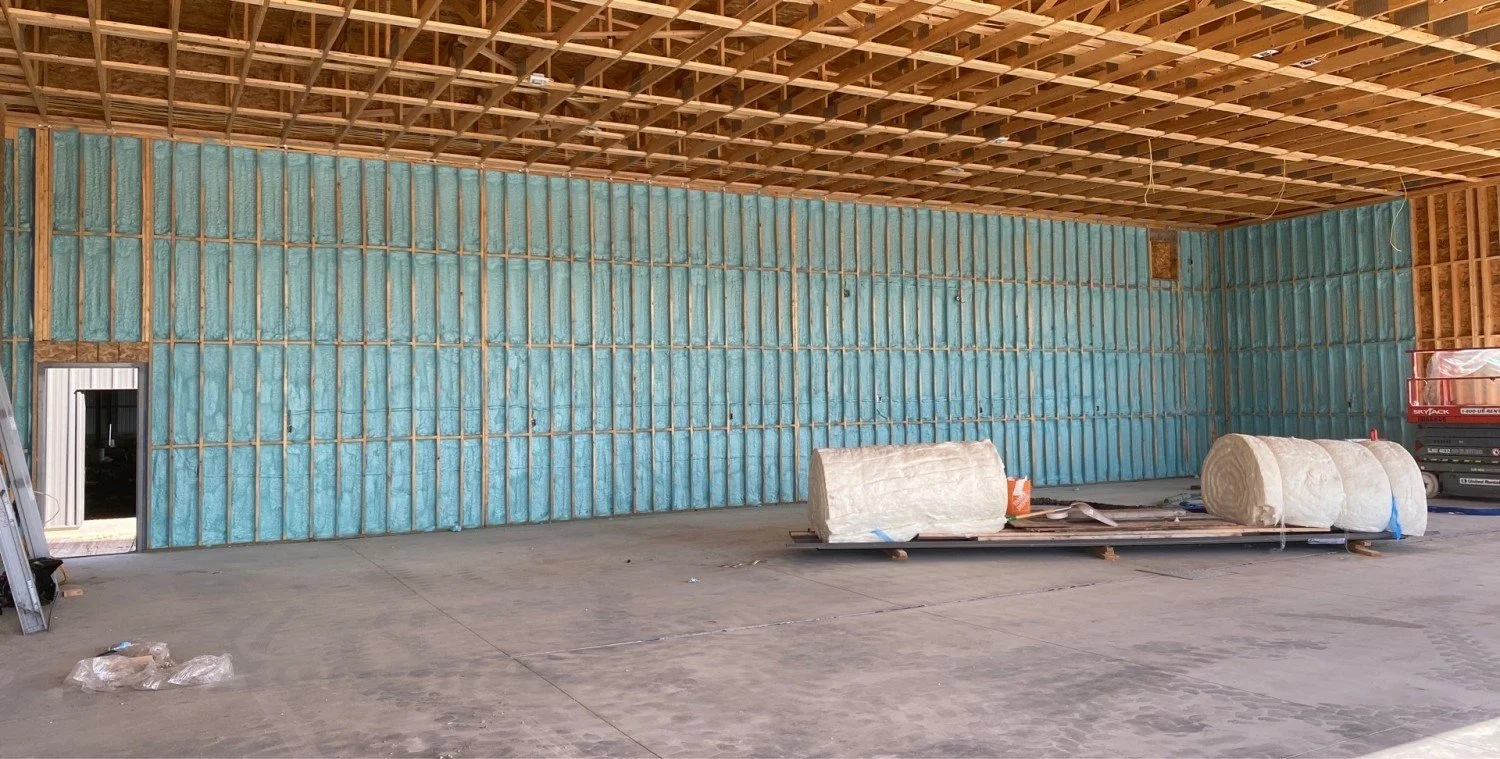
Agricultural Spray Foam Insulation in Winnipeg
Every Uninsulated Winter Is Costing You More Than You Think
Manitoba winters show no mercy when it comes to agricultural buildings. Condensation can build up on metal walls, heating costs skyrocket and poorly insulated structures put livestock, equipment and stored product at risk.
Agricultural spray insulation from Great Canadian Insulation offers the following benefits:
Eliminates condensation on metal walls and roofs
Reduces heating costs by sealing your building envelope from the cold
Protects your investment with a durable, long-lasting insulation solution
The wrong insulation can leave your buildings fighting for their life every single season. That's why Great Canadian Insulation provides agricultural insulation services across Winnipeg and rural Manitoba. Our team has the equipment and experience to take care of quonsets, pole barns, livestock barns and everything in between. We've been building efficient, resilient operations for over 40 years. Our team also assists with Efficiency Manitoba rebate paperwork so you don't have to; contact us today for a free estimate.
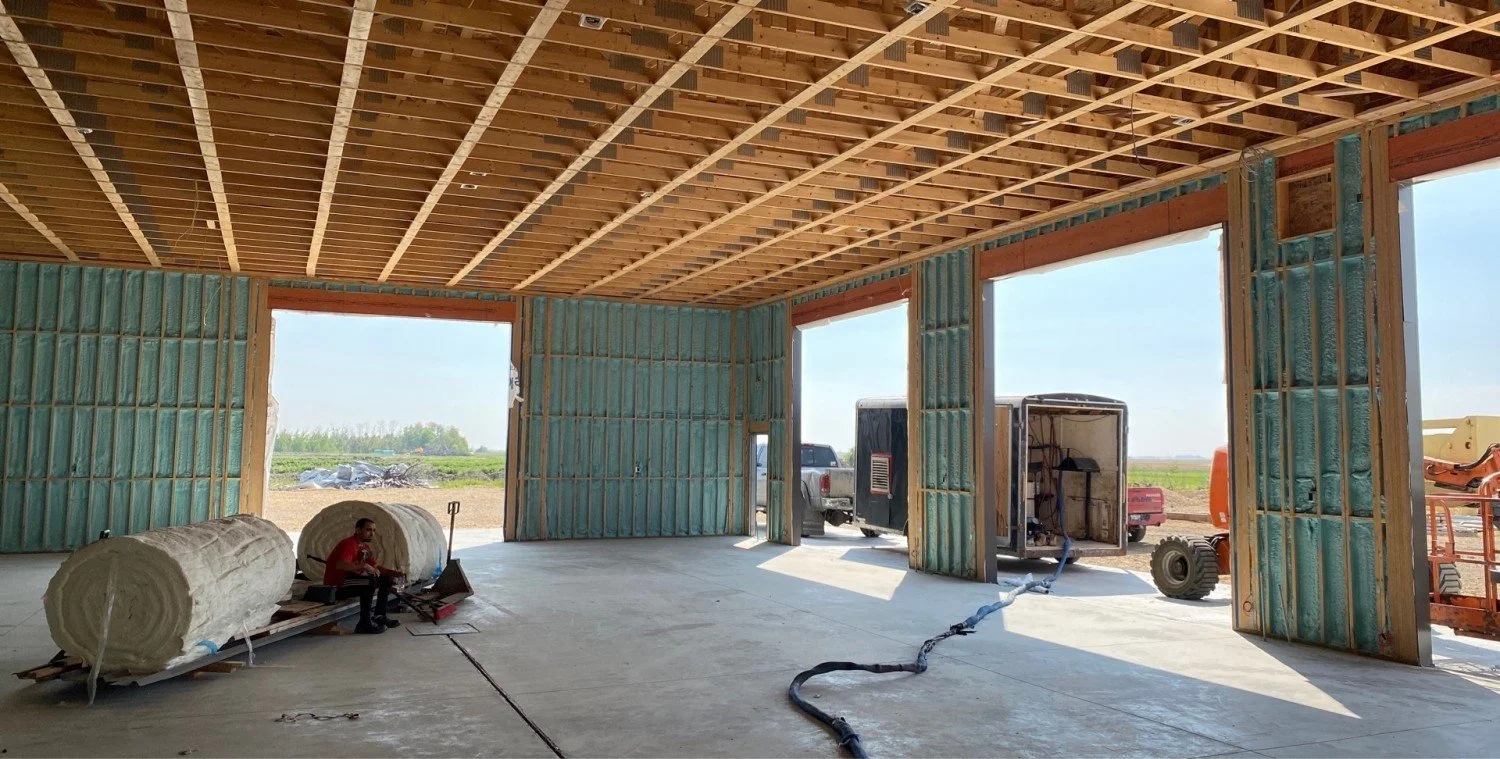
Why Agricultural Buildings Need Spray Foam Insulation
Agricultural buildings face insulation challenges that residential properties don't. Large open spans, high ceilings and constant moisture from animals, equipment and ventilation systems make insulation work even harder. Here's why spray foam insulation in Winnipeg is the ideal insulation solution for agricultural buildings in Manitoba:
Condensation Control is Critical
Metal buildings are vulnerable to condensation. When warm, moist air inside a barn or quonset hits cold metal cladding during the winter, moisture forms on the surface. As time passes, it results in rust, structural damage and unhealthy conditions for livestock. Closed-cell spray foam bonds directly to metal surfaces, which eliminates the air gap where condensation forms and creates a seamless vapour barrier in a single application.
Energy Costs in Agricultural Operations are Significant
Heating a barn, quonset or farm shop during the Manitoba winter adds up. Without proper insulation, heating systems in agricultural buildings have to work that much harder, driving up energy costs every month. Proper foam insulation dramatically reduces heat loss, lowering your operating costs across the entire heating season.
Agricultural Buildings are Hard on Insulation
Dust, humidity, pests and temperature swings put constant stress on insulation materials. Spray foam insulation is rigid, seamless and resists moisture, pests and compression. Following installation, it stays in place and maintains its performance for decades without settling gaps or replacement.
Building Integrity Matters
When a building fails, it can be detrimental to a commercial agricultural operation. The biggest consequences are lost inventory, compromised livestock and costly repairs. Spray foam insulation strengthens the building envelope, adds structural rigidity to metal walls and roofs while protecting against freeze-thaw damage.
Agricultural Buildings We Insulate
Great Canadian Insulation installs spray foam insulation in agricultural buildings across Winnipeg and rural Manitoba. Every building has its own challenges. Here's how we approach them:
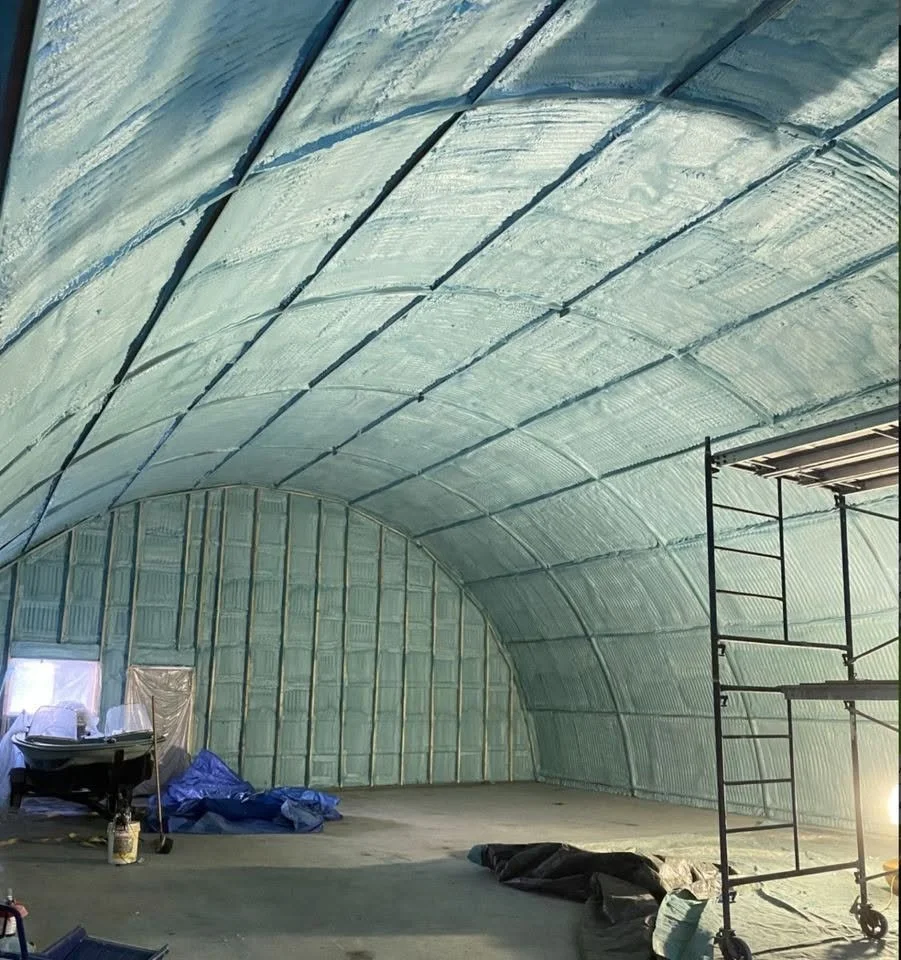
Quonset Insulation
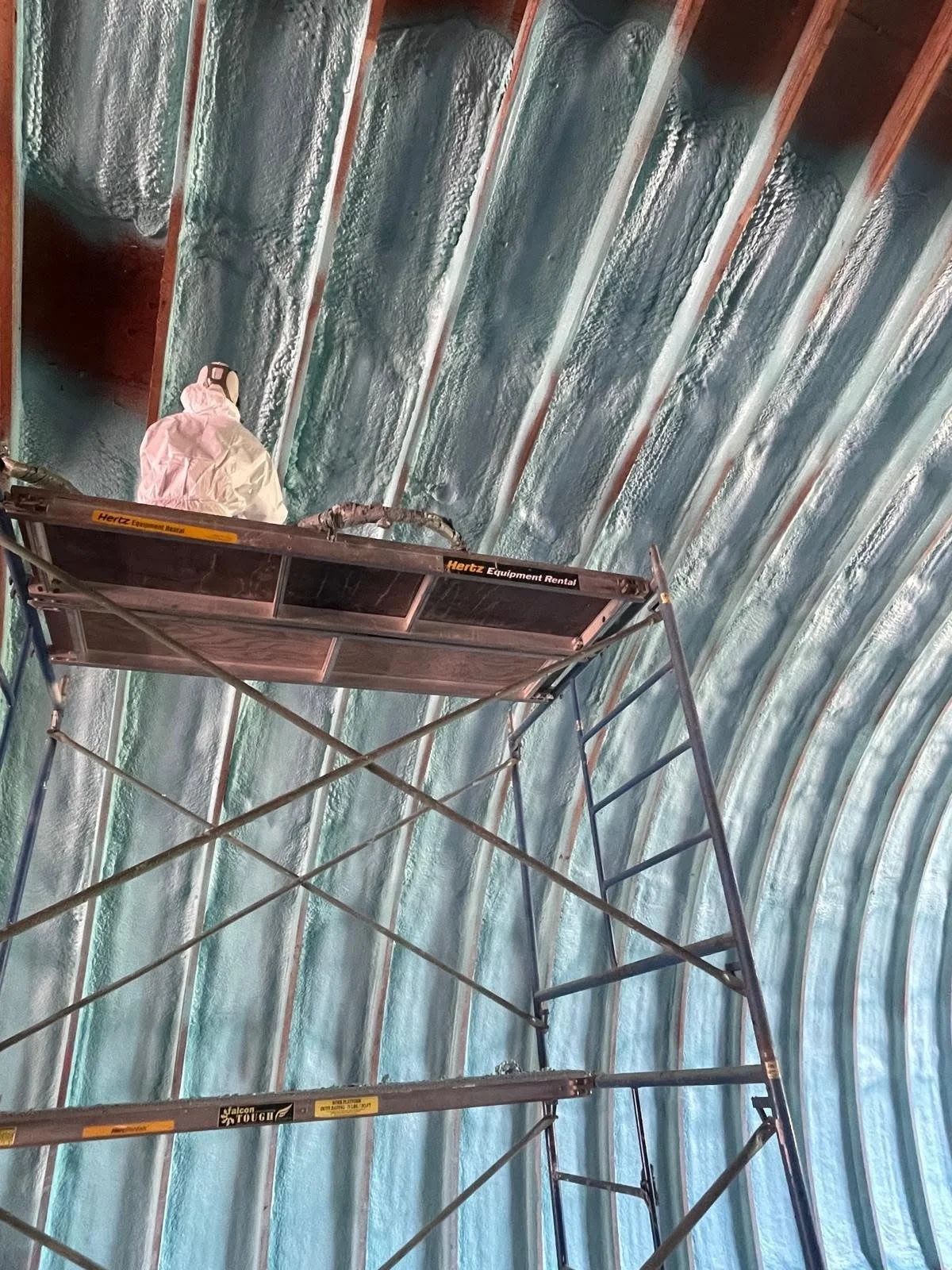
Quonsets are common, but challenging to insulate. Their curved metal walls and roofs are highly conductive, transferring cold in winter and heat in summer with very little resistance. Without insulation, condensation is inevitable.
Spray foam is the answer. It conforms to the curved profile of the structure, bonding directly to the metal, effectively eliminating air pockets where moisture can collect. A fully insulated, condensation-free interior holds temperature more effectively than any loose-fill or batt product. From storing equipment to housing livestock and using your quonset as a workspace, spray foam makes the building functional year-round.
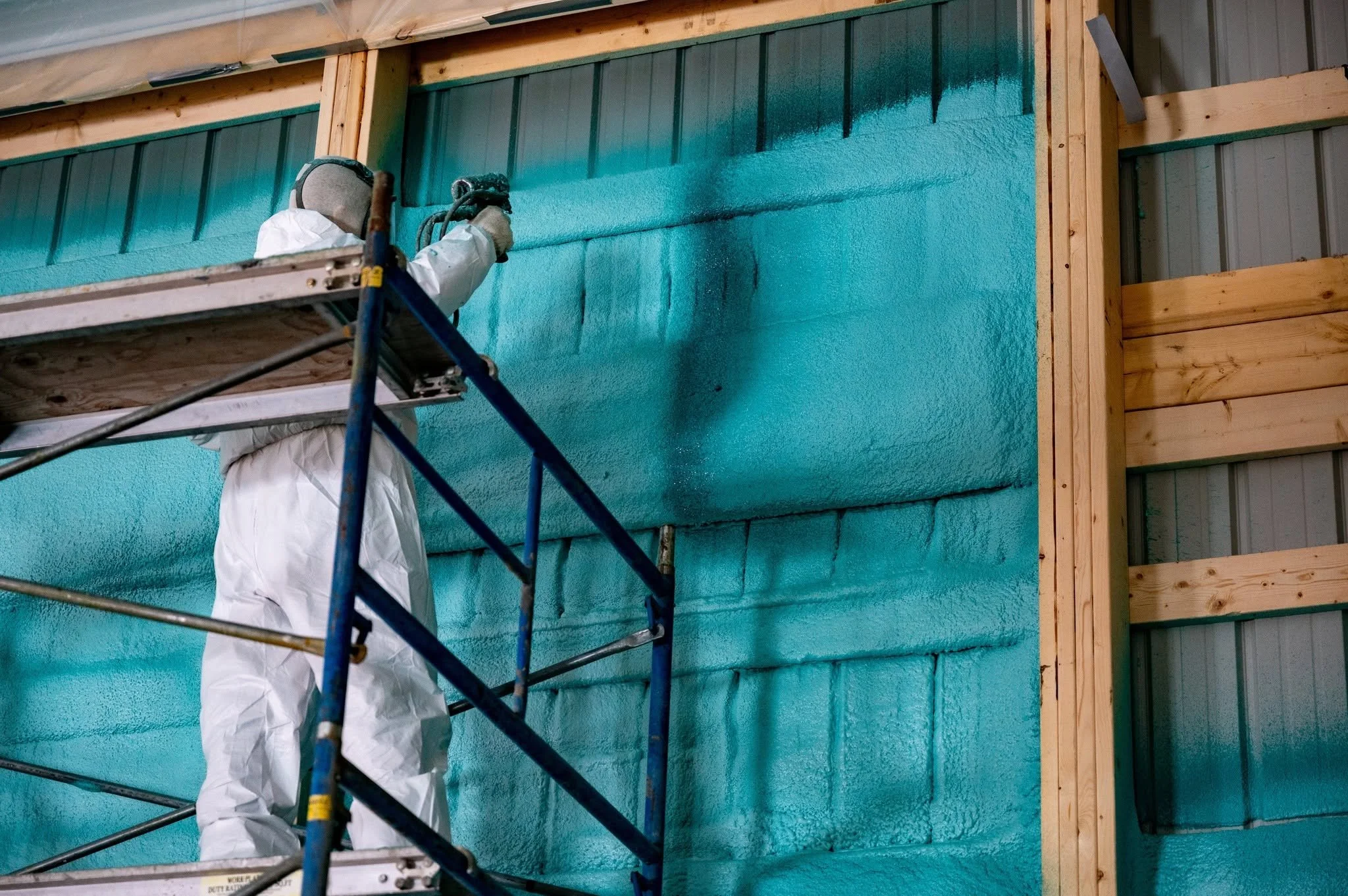
Pole Barn Insulation
Pole barn insulation needs an option that handles wall cavities, exposed framing and the heavy use that comes with agricultural buildings. Spray foam insulation fills cavities, seals around framing members and creates a continuous air barrier across the entire wall and roof assembly.
For pole barns used as livestock housing, spray foam boasts a seamless surface that makes cleaning and disinfecting easier, leaving no gaps or exposed fibres to harbour bacteria or moisture. For pole barns using equipment storage or farm shops, energy savings from proper insulation are noticeable.
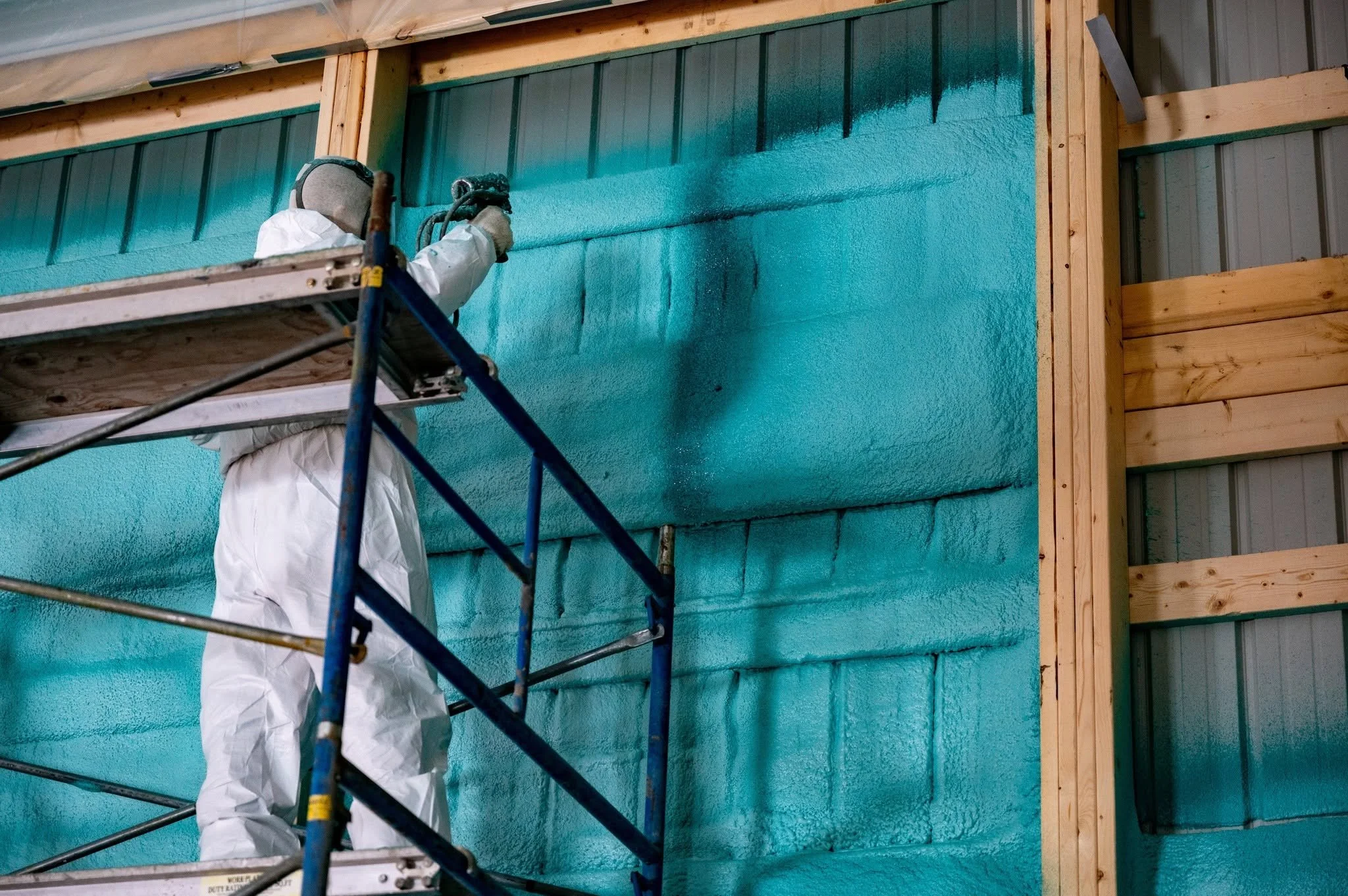
Barn Insulation
Livestock barns need an insulation system with certain performance characteristics.Temperature stability keeps animals comfortable and reduces stress. Moisture control keeps animals and the building structure safe. Durability is also important because barn insulation needs to stand up to daily wear.
Closed-cell spray foam does all of that. It creates a stable thermal environment, controls moisture at the wall and roof surface, while being tough enough to stand the rigours of a working barn. Plus, it resists pest activity from rodents and insects without compromise.
Barn condensation is common among agricultural operators. Are you noticing moisture on walls, frost on interior surfaces or rust forming on metal components? Spray foam insulation is the long-term solution you need.
Farm Shop Insulation
A well-insulated shop is a valuable asset. Servicing equipment, fabricating parts or using the space as a garage for vehicles and machinery? A properly insulated shop stays warm enough to work in through the winter without running a heater at full capacity all day.
Spray foam insulation for farm shops seals the building envelope tightly, eliminates drafts and cold spots while providing an indoor temperature that makes the shop usable year-round. Cold storage areas within the shop can also benefit from foam insulation since it maintains consistent temperatures for stored products or chemicals.
Spray Foam vs. Other Insulation Options
for Agricultural Buildings
When it’s time to insulate metal agricultural buildings, not all insulation products perform equally. Here’s a breakdown of how spray foam compares to its counterparts:
Spray Foam Insulation: Bonding directly to any surface and conforming to irregular shapes, it creates a seamless air and vapour barrier in a single application. Plus, it has the highest R-value per inch of any insulation product, doesn’t settle or compress over time and resists moisture, pests and physical damage.
Fibreglass Batt Insulation: This option needs a finished wall cavity to install and leaves gaps around framing members, fasteners and penetrations. Agricultural buildings have exposed framing, irregular cavities and are prone to moisture. As a result, fibreglass batt underperforms.
Blown-In Insulation: Best for attic applications, it’s not ideal for the walls and roofs of most agricultural buildings. It needs a contained cavity and is vulnerable to moisture and settling in the open, high-humidity environments that are typical of active farm buildings.
In agricultural buildings in Manitoba, closed-cell spray foam is ideal.
Efficiency Manitoba Rebates for Agricultural Insulation
Agricultural spray foam is eligible for rebate funding available through Efficiency Manitoba. The Building Envelope Program can cover up to 100% of insulation material costs for qualifying agricultural buildings, making spray foam more affordable than operators expect.
Additional programs that may apply to your agricultural operation include:
Custom Energy Solutions: The Custom Energy Solutions program provides performance-based incentives for qualifying energy-efficiency projects. Incentives are based on the estimated energy savings achieved through your insulation upgrade.
New Buildings Program: For new agricultural buildings, Efficiency Manitoba provides funding toward a feasibility study to quantify potential energy savings. Additional incentives based on energy savings.
Feasibility Studies: If you are considering an energy-efficiency upgrade but are unsure which improvements make sense for your operation, support may be available for a feasibility study. These studies can help identify potential energy savings, project requirements and opportunities for additional incentives.
At Great Canadian Insulation, we help agricultural operators navigate the Efficiency Manitoba rebate process. We take care of the application, manage the paperwork and keep you in the loop so you can focus on your operation. Contact us to find out which programs you qualify for.
Why Manitoba Agricultural Operators Choose Great Canadian Insulation
Great Canadian Insulation has been providing insulation services across Winnipeg and rural Manitoba for 40+ years. We understand the demand agricultural operations face and bring the equipment, experience and honest advice to match. When you work with us, you can expect:
We Come to You: We serve rural Manitoba. We travel to agricultural properties throughout the province and can handle large-scale commercial insulation projects.
We Work Around Your Schedule: Farming operations can't stop for renovations. We schedule insulation projects at times that cause minimal disruption to your operations.
We Use Top-Quality Materials: Our team uses 2lb closed-cell spray foam insulation for building interiors and 3lb polyurethane spray foam for commercial roofing. The products stand up to the demand of this environment.
We Handle the Rebate Work: From initial application to post-installation documentation, our team manages the Efficiency Manitoba process on your behalf.
We Give Honest Advice: Every project begins with an assessment. We tell you what your building needs, not what costs the most.
Frequently Asked Questions About Agricultural Spray Foam Insulation
-
Prices vary. Insulating an agricultural building depends on the size of the structure, type of spray foam used, the condition of the existing building envelope and the accessibility of the surfaces. Contact us for an estimate.
-
You should, especially in our weather. Not insulating a pole barn makes it lose heat quickly in the winter, results in condensation on metal surfaces and is uncomfortable and expensive to work in. Insulating a pole barn with closed-cell spray controls moisture, lowers heating costs and makes the building genuinely usable year-round. Insulation pays off if you need to heat your pole barn.
-
Closed-cell spray foam is ideal for agricultural buildings. Unlike batt or blown-in products, it bonds directly to metal surfaces, eliminating the air gap where condensation forms. Plus, it provides the highest R-value per inch, creates a built-in vapour barrier and resists moisture, pests and physical damage, which are essential in an agricultural environment.
-
Condensation forms when warm, moist air comes into contact with a cold metal surface. Closed-cell spray foam bonds directly to the metal and removes the temperature difference. It's no longer a cold surface where moisture can condense on, which protects the building structure from rust and rot, creating healthier conditions for livestock and stored product.
-
Manitoba's Building Envelope Program can cover up to 100% of insulation material costs for qualifying agricultural buildings. Additional programs such as the Custom Energy Solutions incentive and funding for feasibility may also apply to your project. Contact us to find out which programs your building qualifies for.
-
Closed-cell spray foam is durable. With proper installation, it can last 40 years or more without settling, compressing or degrading. Additionally, it maintains its R-value while holding up to the conditions of active agricultural buildings like exposure to dust, humidity, pests and physical wear.