
Should I Insulate My Pole Barn in Winnipeg?
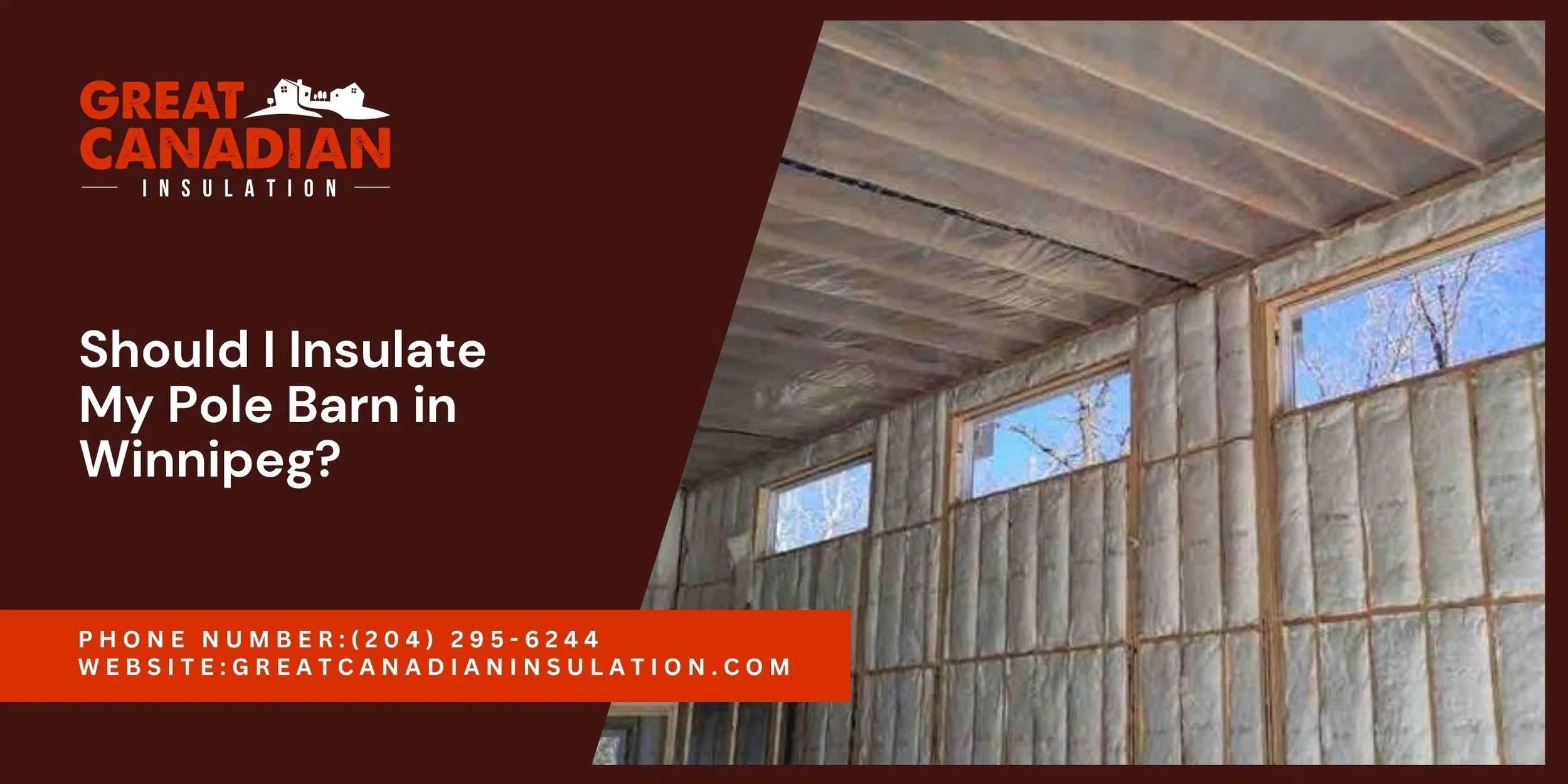
If you have to ask, you probably know the answer. When a pole barn dips to frigid temperatures in the winter, drips with condensation in the spring and is getting expensive to heat all season, it’s trying to tell you something. Yes, insulating your pole barn in Winnipeg is worth it. Understanding why and choosing the right insulation makes a difference.
At Great Canadian Insulation, we’ve been insulating agricultural buildings across Winnipeg and rural Manitoba for over 40 years. That said, there’s a lot to know about pole barn insulation. It solves problems and has several benefits. To learn more about our full range of agricultural spray foam insulation services across Winnipeg and rural Manitoba or to get started with a free estimate, get in touch with our team today.
What Problems Does an Uninsulated Pole Barn Face in Manitoba?
In Manitoba, our weather is unforgiving. Because of that, an uninsulated pole barn will take the brunt of it. When your pole barn isn’t properly insulated, you’ll run into these problems:
Condensation Damage
Metal walls and roofs are highly conductive. During the winter, warm moist air inside the barn will hit the cold metal surface and moisture will begin to form on walls, on the roof deck, on equipment and on stored products. The result? Usually, you end up with rust, wood rot and structural deterioration. Then, when spring arrives, temperatures start swinging and condensation becomes relentless.
Sky-High Heating Costs
An uninsulated pole barn will lose heat as fast as you can produce it. Running a heater to keep the space workable means you’re paying to heat the outdoors. Without insulation sealing the building envelope, your heating system will always be running, and you’ll see that in your energy bills.
Uncomfortable and Unusable Working Conditions
When a pole barn falls to -20°C inside in January, it becomes a problem. It doesn’t matter whether you’re servicing equipment, storing chemicals or housing livestock, an uninsulated building will make every winter task harder, longer and more physically demanding.
Pest Vulnerability
Gaps and unsealed cavities in an uninsulated pole barn make it easy for rodents and insects to make a home. After pests make their way into wall cavities, they damage the structure and the stored materials.
Shortened Building Lifespan
Manitoba has a freeze-thaw cycle every year. Without insulation protecting the building envelope, moisture can get in and deteriorate framing, cladding and fasteners. As a result, your pole barn won’t last as long.
What Are the Benefits of Insulating a Pole Barn?
Insulating your pole barn properly will feel like night and day. The difference is immediate and measurable. Check out the advantage:
Lower Heating Costs
Sealing the building envelope doesn’t force your heating system to work harder. Besides having a workable temperature, many operators see a huge drop in their energy bills.
Condensation Eliminated
Closed-cell spray foam bonds directly to metal surfaces so the temperature difference at the wall and roof surface where condensation forms is gone. That means no more moisture dripping from the ceiling or pooling on equipment.
A Genuinely Usable Workspace
An insulated pole barn is better at holding heat, staying at a consistent temperature and remaining comfortable to work in through the coldest Manitoba winters. Spend more time being productive and less time being cold.
Cleaner, Easier Maintenance
Spray foam has a seamless surface, which leaves no gaps or exposed fibres where bacteria, moisture or debris can accumulate. For pole barns that house livestock, cleaning and disinfecting is simple.
Better Protection for Equipment and Stored Product
Consistent temperatures and controlled moisture levels keep your machinery, tools, chemicals and stored materials safe from the damage temperature swings and humidity cause.
Longer Building Lifespan
Insulation controls moisture and protects structural components from freeze-thaw damage. It also helps your pole barn last longer.
What is the Best Insulation for a Pole Barn in Winnipeg?
Some types of insulation aren’t made for pole barns. Check out why closed-cell spray foam insulation is ideal for Winnipeg pole barns:
It Bonds Directly to Metal
Pole barns feature metal cladding on walls and roofs. Closed-cell spray foam adheres directly to metal surfaces to create a seamless barrier without air gaps, cavities or room for condensation to form.
It Fills Irregular Cavities Completely
Pole barn construction involves exposed framing members, irregular wall assemblies and penetrations for wiring, vents and fasteners. Spray foam insulation expands to fill every gap, creating a continuous air barrier that batt or blown-in products cannot match.
It Provides the Highest R-Value Per Inch
In Manitoba, R-value is important. Closed-cell spray foam has the highest thermal resistance per inch of any insulation product so you get the maximum performance in the wall and roof depth you have available.
It Includes a Built-In Vapour Barrier
Two inches of closed-cell spray foam provides a built-in vapour barrier with no need for a separate membrane. In a moisture-prone environment like a working pole barn, that’s a big advantage.
How Does Pole Barn Insulation Handle Condensation?
Condensation is damaging and frustrating, especially in uninsulated metal agricultural buildings. It’s also why Manitoba operators call us.
Here’s what happens:
Warm, moist air inside the pole barn rises and contacts the cold metal wall or roof surface
The temperature difference causes moisture in the air to condense on the surface
Moisture drips onto the equipment, soaks into wood framing and makes metal components rust
Closed-cell spray foam solves the problem at the source by bonding directly to the metal surface. In turn, it takes away the cold surface where condensation forms. A seamless layer of foam protects against the warm interior air and maintains a consistent surface temperature. Moisture has nowhere to go.
Pole barn insulation provides immediate and visible results. Operators who’ve dealt with chronic condensation problems often notice the difference in the first winter after installation.
Can You Get a Rebate for Insulating a Pole Barn in Manitoba?
You can and it reduces the overall cost of your project. Efficiency Manitoba’s Building Envelope Program can cover up to 100% of insulation material costs for qualifying agricultural buildings including pole barns.
Additional programs that may apply to your operation include:
Custom Energy Solutions: This performance-based program pays $0.25 per kWh and $0.30 per m³ of annual energy saved. The more energy your insulation upgrade saves, the higher the incentive you receive.
Feasibility Studies: Weighing your options or wondering about potential savings? Efficiency Manitoba will cover 50% of the cost of a feasibility study up to $20,000. Projects that demonstrate viable energy savings qualify for further incentives through the Custom Energy Solutions Program.
At Great Canadian Insulation, we take care of the Efficiency Manitoba rebate process on your behalf. We’ll walk you through the process from initial application to post-installation paperwork. Reach out to learn if your pole barn qualifies and which programs might apply to your project.
Is It Time to Insulate Your Pole Barn?
If your pole barn is losing heat, dripping with condensation or not performing how it should, proper insulation is the answer. In Winnipeg, an uninsulated pole barn is a liability while an insulated one is an asset. At Great Canadian Insulation, we will assess your building, recommend the right solution and install to the highest standard.
Considering spray foam insulation for your pole barn? Contact us for an estimate today!