
What is the Average Lifespan of Insulation in Winnipeg?
You probably don’t think about insulation in your home until something goes wrong. Are energy bills higher than usual? Are some rooms cooler than others? Are drafts more noticeable than they used to be? Winnipeg has bitter, cold winters, and insulation is essential to keeping your home comfortable and energy-efficient.
At our insulation installing company in Winnipeg, homeowners often ask how long insulation lasts. It ultimately comes down to the type of insulation, the installation method and how well it’s held up to Winnipeg’s weather. Let’s jump in!
Does Insulation Wear Out Over Time?
Many homeowners assume insulation lasts forever, but that’s simply not true. While insulation doesn’t have an “expiration date,” its performance does decline over time. Even insulation that looks fine on the surface might not provide the protection your home needs anymore.
The following factors influence insulation lifespan the most:
Moisture condensation, especially in attics and basements
Rodent or pest activity that damages or contaminates materials
Settling or compression, which reduces coverage and R-value
Poor original installation that leaves gaps or air leaks
Winnipeg’s freeze-thaw cycles, which stress materials year after year
That’s why it’s important to understand how long each insulation lasts. From there, it can help you decide when it’s time for an upgrade.
Average Lifespan by Insulation
Depending on your home, you’ll have a different type of insulation. The one you have determines its lifespan. Here’s an overview:
Fibreglass Batt Insulation
Average Lifespan: 15-20 years
Generally used in walls and attics, this insulation can fail for a variety of reasons. These include compression, moisture exposure and air gaps.
Fibreglass batt insulation is affordable and widely used across Winnipeg. However, it’s prone to moisture and settling. Once compressed or damp, it loses a lot of its insulating power.
Blown-In Cellulose or Fibreglass Insulation
Average Lifespan: 20-25 years
Usually found in attics or irregular spaces, this insulation doesn’t last forever. It can settle and absorb moisture.
Blown-in insulation provides better coverage than batt insulation, but it can settle, especially in older homes. This reduces its effectiveness unless topped up or replaced.
Spray Foam Insulation
Average Lifespan: 30+ years
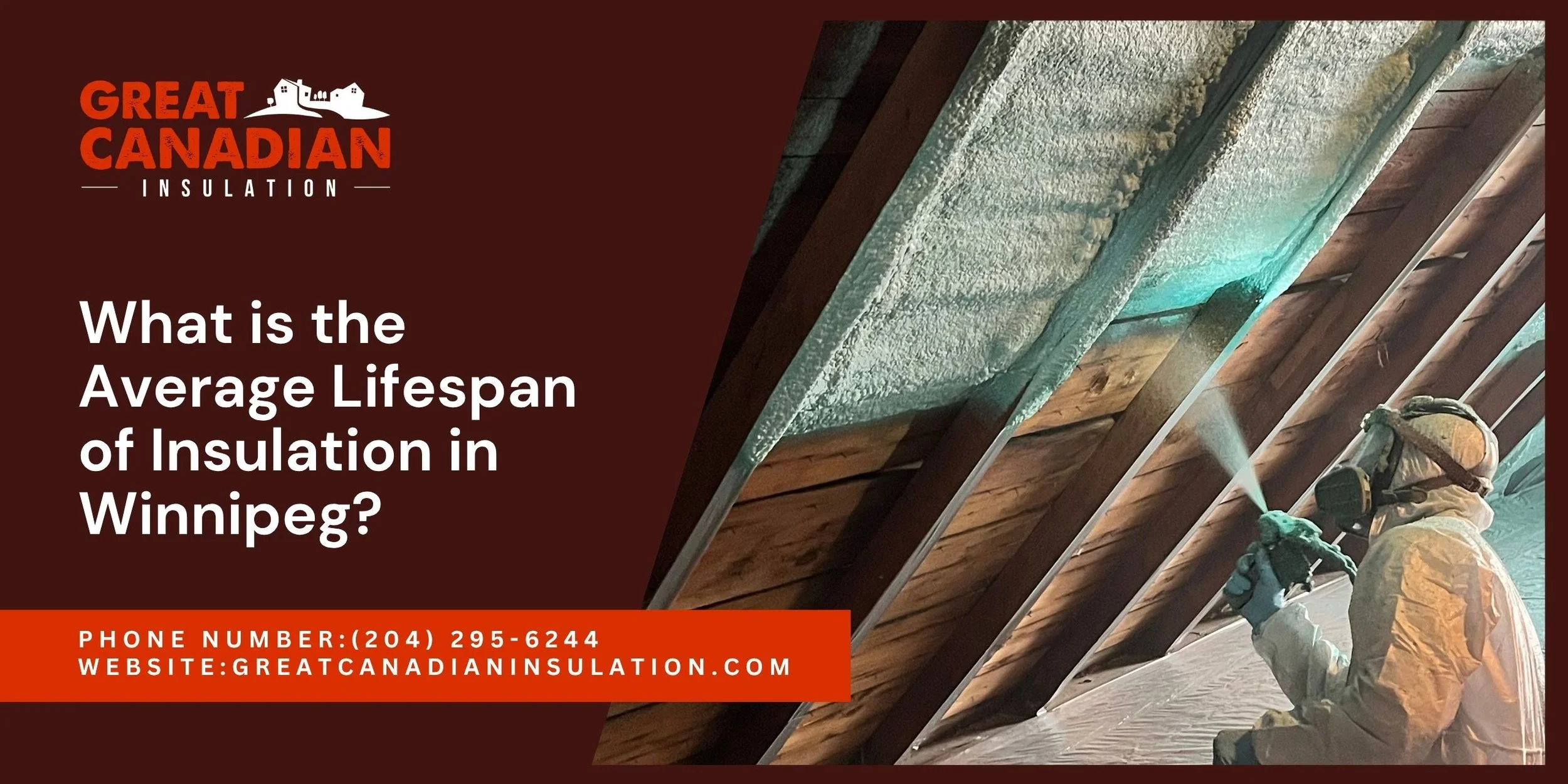
Mostly used in attics, walls, basements and crawl spaces, this insulation lasts much longer. Why? It offers an airtight seal, moisture resistance and minimal settling.
Spray foam insulation often outlasts other options because it adheres directly to surfaces and withstands moisture. In most cases, replacement isn’t needed for a long time unless it’s damaged during renovations.
Which type of insulation do you have in your home? Schedule a professional inspection to identify it and assess its condition.
Signs Your Insulation is Reaching the End of Its Lifespan
Even if your insulation hasn’t reached its expected lifespan, performance issues often mean it’s time for replacement or upgrading. Watch for:
Rising energy bills with no change in usage
Uneven temperatures throughout your home
Drafts or cold floors, especially in winter
Moisture, condensation or mold in attics or basements
Rodent or pest evidence in insulation areas
At Great Canadian Insulation, we usually find these issues during our routine inspections. Sometimes, years can go by before homeowners realize insulation is the root cause.
How Winnipeg’s Climate Affects Insulation Lifespan
Winnipeg’s weather is rough on insulation. Long winters force insulation to work overtime, while summer humidity brings moisture into attics and wall cavities. Ice dams, attic condensation, and temperature swings all accelerate wear.
As a result, insulation in Winnipeg degrades faster than in milder climates. That’s why booking periodic inspections is essential.
When to Replace vs. Upgrade Insulation
Not all insulation issues require removing the old insulation. It comes down to the condition of your insulation and the specific problem.
Here’s our advice: Replace insulation if it’s wet, mouldy, contaminated or heavily damaged. Upgrade or add insulation if it’s dry and intact but doesn’t meet today’s R-value standards.
A professional assessment can help determine which option makes the most sense for your home and budget. Many homeowners are surprised to learn that strategic upgrades, rather than full replacement, can deliver major energy savings.
Plan Ahead for Insulation Replacement in Winnipeg
The lifespan of insulation in Winnipeg depends on the material and how well it’s held up against moisture, pests and extreme temperatures. Fibreglass batt may last 15-20 years, blown-in insulation around 20-25 years and spray foam 30 years or more. At Great Canadian Insulation we understand that performance is more important than age alone. If your home feels drafty, your energy bills are higher than usual or your insulation is nearing the end of its life, we can help.
Ready to find out how much longer your insulation will last? Contact us today!